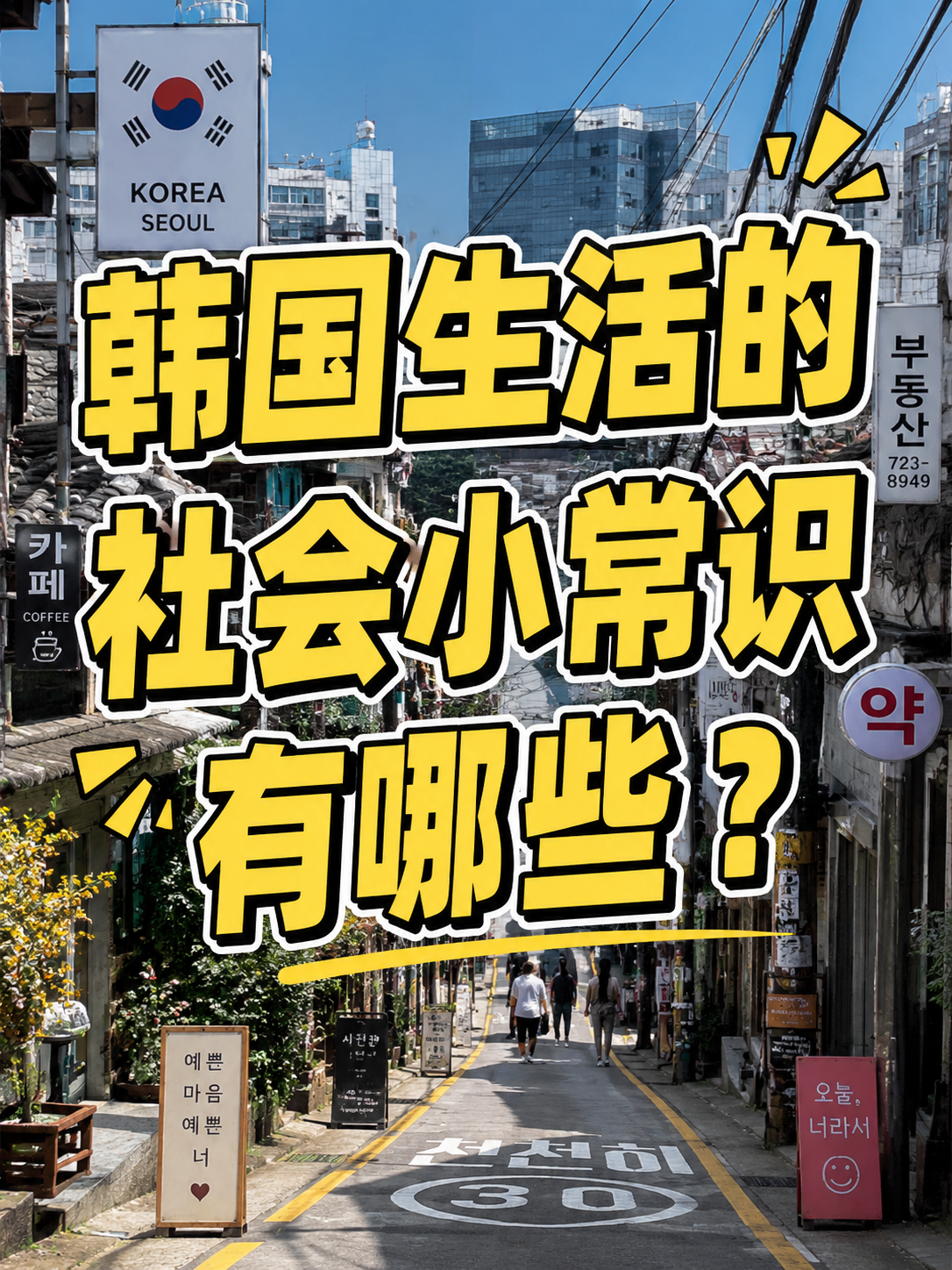
When you first come to live and travel in South Korea, in addition to core cultural differences, many subtle common sense of social life can easily be ignored. Any carelessness can easily cause social embarrassment and violate local rules. The following is a compilation of 20 high-frequency and practical common sense in South Korean society, covering all aspects such as travel, consumption, etiquette, housing, and public rules.
1. South Korea strictly distinguishes honorific words from Pingyuan. When meeting for the first time and facing people more than one year older, honorific words must be used throughout the entire process. Using Pingyuan at will will be regarded as rude.
2. Public subways and buses have exclusive seats for the elderly, pregnant women, and disabled people. Even if the carriages are crowded, young people should try not to sit down and can only be used for a short time in emergencies.
3. There is no tipping culture in South Korea. Restaurants, B & Bs, taxis, and beauty services do not need to pay tips. Taking the initiative to tip will make locals puzzled.
5. There is no self-service drinking in South Korea. In formal occasions, it is basic etiquette for others to pour wine for yourself and add wine for others. It is considered rude to pour wine alone.
6. Ice water, kimchi and other side dishes in Korean restaurants are free and unlimited, without extra charge. This is a general rule for Korean restaurants.
7. Most local people will not apologize for unintentional minor collisions and crowds on the streets and subways. Non-malicious physical contact in public scenes is regarded as a normal phenomenon.
8. South Korea's garbage classification is extremely strict. Food waste, general garbage, and recyclable garbage must be classified and placed in different categories, and you will face fines if you discard them at will.
9. Spiting and littering are strictly prohibited in outdoor public areas. There are very few garbage cans on the street. Garbage must be carried with you and discarded at a designated point.
10. Loudness, playing music outside, and talking loudly are prohibited in residential areas at night. South Korean residential areas have strict night noise control.
11. When handing over business cards, cups, gifts and other items, regardless of the age of the other party, giving priority to using both hands is a common courtesy and etiquette.
12. Korean convenience stores support 24 hours a day and can handle payment, recharge, express delivery, and pickup. They are a multi-functional convenience service site.
13. When taking the escalator, you need to stand on the right. The left passage is reserved for people in a hurry. Do not stand side by side to block the passage.
14. Most indoor areas in South Korea are completely smoke-free. Smoking is prohibited in restaurants, cafes, subway stations, and corridors. Smoking is allowed only in designated outdoor smoking areas.
15. When ordering, checking out, and asking for directions, try to avoid calling each other directly. Use honorific terms such as "senior" and "shop assistant" to better suit local social habits.
16. South Korea's express delivery and takeout delivery are fast, and most of them are placed at the door or corridor by default. There is no need to sign in person. Remember to check the items in time after picking up the items.
17. It is prohibited to make loud phone calls, broadcast video and audio outside, and eat in public transportation. The overall environment in the carriage is quiet and order must be consciously observed.
18. When visiting a Korean friend's home, you need to take off your shoes in advance and enter the room. Do not put on your shoes and enter the room. Most families will prepare spare slippers for the entrance.
19. The price tag of physical stores in South Korea is basically tax-inclusive, and no additional tax is required. The checkout price is consistent with the price tag, so there is no need to worry about hidden consumption.
20. Taking photos with South Koreans and taking pictures of passers-by and shop scenes requires the consent of the other party in advance. Taking photos or snapping photos at will be regarded as disrespecting others.