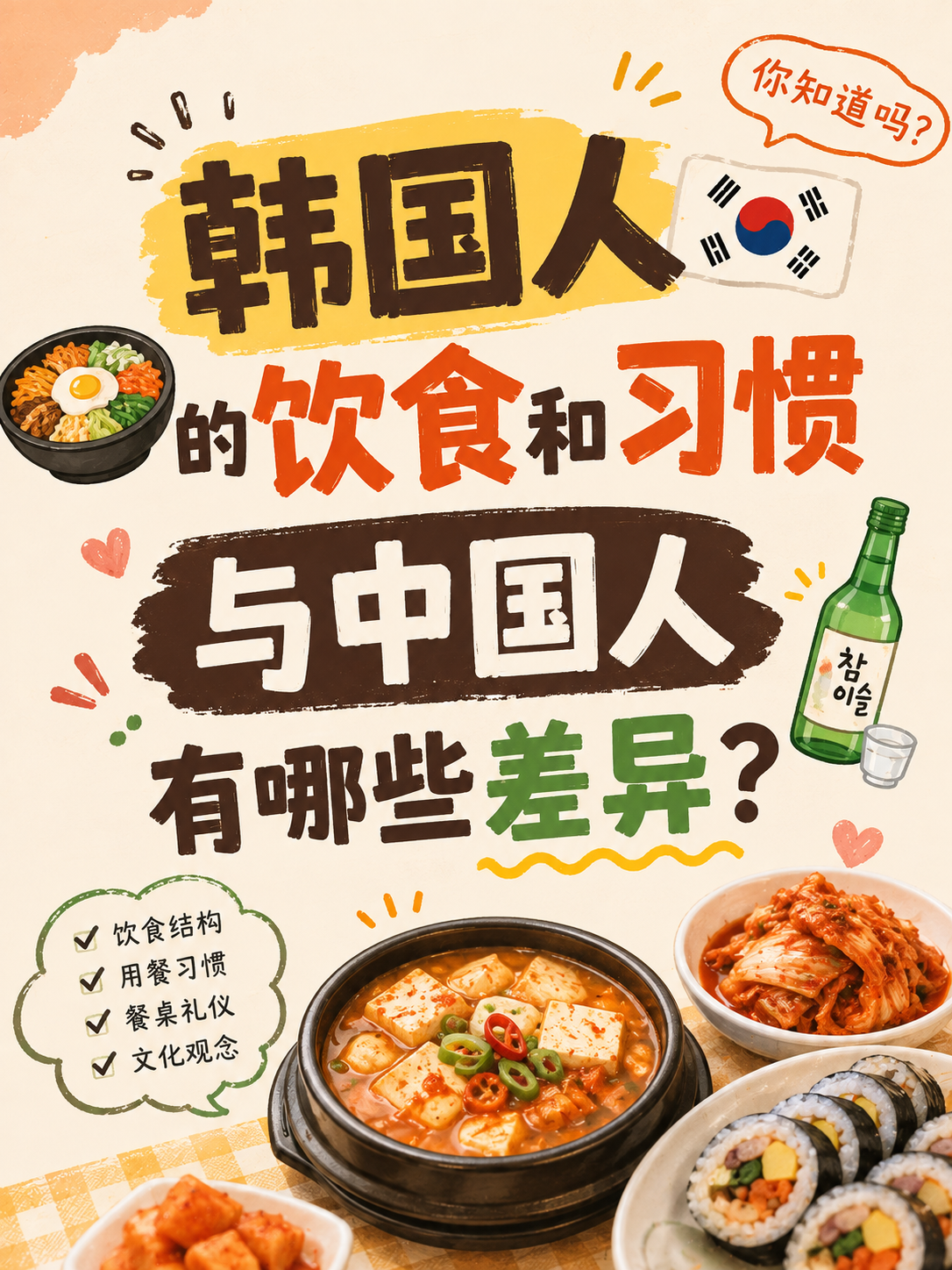
China and South Korea belong to the East Asian cultural circle and have certain origins in food culture, but there are many obvious differences in food structure, cooking methods, daily eating habits, table etiquette, etc. These differences are rooted in the living customs and social culture of the two countries, and are intuitively reflected in the details of three meals a day.
1. Differences in diet structure: flexible diversity versus fixed unity
China's three meals are clearly differentiated and have flexible structure. For breakfast, they prefer light staple foods such as porridge, steamed buns, noodles, and soy milk. Lunch focuses on satiety and fullness. Dinner is relatively simple. There are great differences in the diet between the north and the south, and there are many cooking styles. The structure of three meals in South Korea is highly unified, with almost no difference between morning, middle and evening. Each meal is fixed to a combination of white rice, Korean soup, and a variety of pickled side dishes. The diet pattern is single and fixed, and the ingredients mix changes little throughout the year.
2. Differences in cooking methods: stir-fried diversified versus light fermentation
Chinese food is mainly fried, stir-fried, fried, braised and stewed. It pays attention to stir-frying over high fire and has full color, aroma, and flavor. The dishes are heavy oil, heavy salt and heavy seasonings, and the taste is rich and rich. Korean food is rarely stir-fried. The core cooking methods are salting, cold salad, stewing, and roasting. It is mainly low-oil and light, and relies heavily on fermented ingredients. Fermented foods such as kimchi, soy sauce, and hot sauce are the core of Korean dining tables. The sour, spicy and salty aroma are their signature flavors, and the ingredients have outstanding flavors.
3. Differences in tableware and eating habits
China people use bamboo and wood chopsticks every day. They can serve bowls and rice when eating. The eating method is flexible and casual, and the daily dining atmosphere is relaxed. Koreans specialize in flat stainless steel chopsticks and long-handled spoons. They must place their rice bowl on the table and use a spoon to scoop the rice to eat. At the same time, South Korea has strict dining taboos, prohibiting chopsticks from inserting rice, knocking bowls, picking dishes, and chewing loudly. The entire meal is quiet and orderly, and the taboos are far more than in China.
4. Differences in table etiquette: relaxed and casual versus superior and orderly
Chinese table etiquette is relatively loose, family and friends have a lively atmosphere for dinner, there are no strict restrictions on eating for the elderly and young, and drinking and dining are free. South Korean table etiquette is deeply influenced by the culture of respecting the elders and the elders, and has clear hierarchical boundaries. For dinner, elders need to move chopsticks first before the younger generation can eat; when drinking, the younger generation needs to turn his head sideways to drink and pour wine for the elders with both hands. The etiquette is strict, and the atmosphere in formal occasions is solemn and restrained.
5. Differences in daily eating customs
China people prefer tea. Drinking tea after meals is a common habit, and the culture of night snacks is relatively casual. South Korea has almost no tea drinking habit. Coffee is the mainstream drink of the whole country, and drinking coffee after meals has become a national habit. At the same time, South Korea's midnight snack culture is extremely developed. Fried chicken, beer, and fried rice cakes are the mainstream midnight snacks for young people. The living habit of staying up late to eat midnight snacks is more common. In addition, Korean dishes can be replenished for free and unlimited, while Chinese dishes are all ordered in quantity, which is also a distinct difference in consumption and diet between the two countries.
6. Differences in holiday diet
China traditional festival diet is rich and diverse, different festivals have exclusive characteristics of food, regional differences are significant. South Korea's festival diet is unified and fixed. Rice cake soup must be eaten in the New Year, muffins must be eaten in the Mid-Autumn Festival, and seaweed soup must be eaten on birthdays. The national customs are unified and the sense of rituals is extremely strong, but the diet category is relatively single.
All in all, China's diet emphasizes richness and diversity, fireworks and flexibility, while South Korea's diet focuses on regularity and unity, etiquette norms and traditional inheritance. The differences in the diet of the two countries are also intuitive manifestations of different social and humanistic styles.