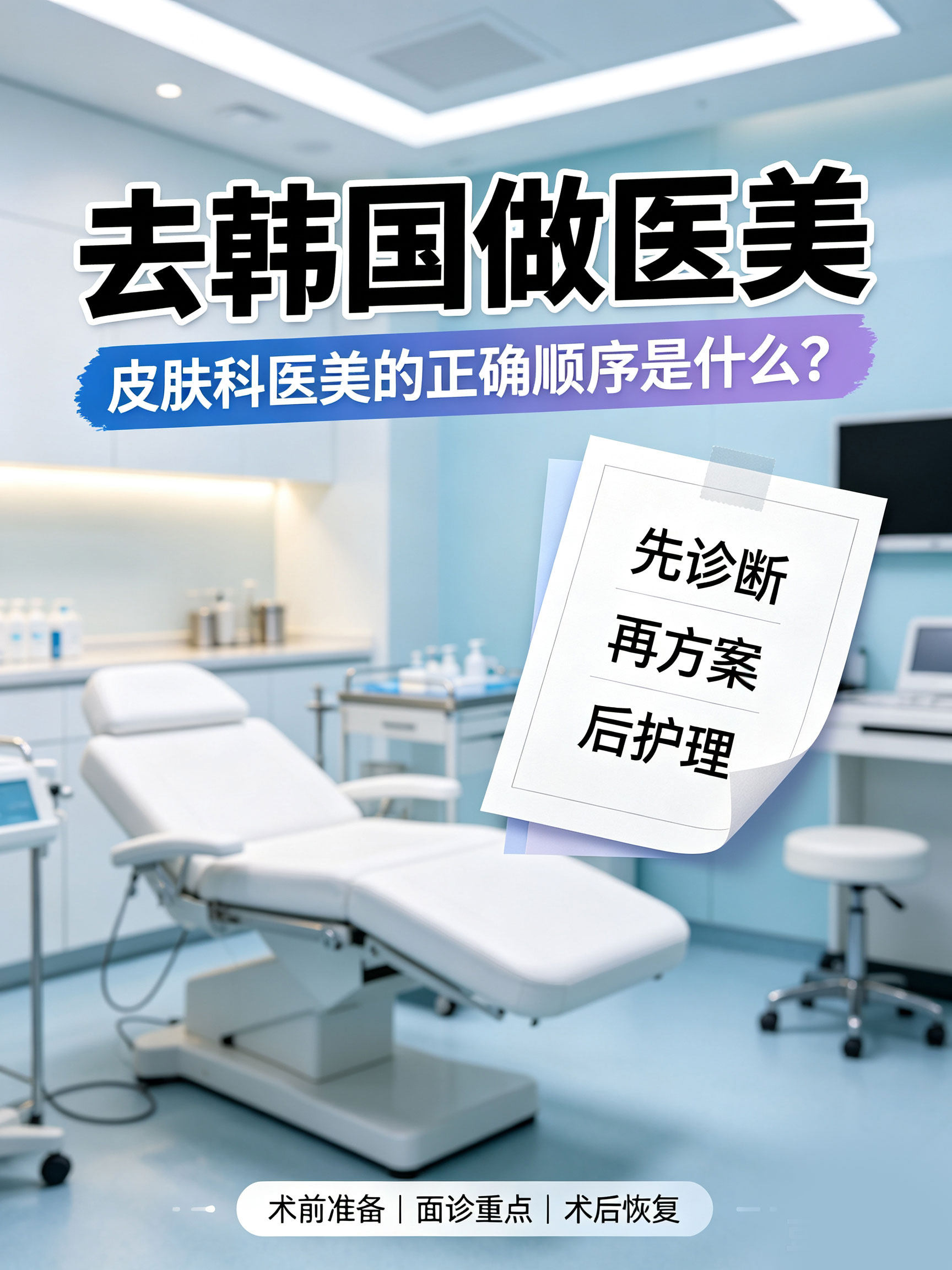
It is easy for many people to step into the trap when they go to South Korea for medical beauty. The core reason is that they do not understand the formal diagnosis and treatment sequence of Korean dermatology departments. Different from domestic casual projects, Korean Medical Beauty has standardized processes. Only by strictly following the order can the effect be ensured and the risk of rollover be reduced. Newbies can just follow it directly.
1. Make an appointment in advance + register at the store
There is no on-site number for popular dermatology departments in South Korea, and an appointment must be made in advance. After arriving at the store, fill out the foreign consultation form, register allergy history, past medical beauty history, skin problems, complete identity verification, and establish exclusive diagnosis and treatment files.
2. Professional skin testing + dean's interview
Do instrument skin testing first to accurately screen for problems such as spots, inflammation, barrier damage, and collagen loss. Then, the certified dean will conduct one-on-one consultations, and according to the skin customization plan, he will refuse to stack assembly line items. This is the key to the effect.
3. Pre-operative cleaning and disinfection
Thoroughly remove makeup and sun protection from the entire face, and perform professional cleansing and skin disinfection to avoid makeup residues, bacteria causing postoperative inflammation and acne, paving the way for subsequent surgery.
4. Layered technique (core sequence)
General standards:Repair the barrier first, then make improvement projects。For healthy skin, priority should be given to optoelectronic products (freckle, skin rejuvenation, and oil control) to solve surface problems; then make injections and fillers to deeply replenish water and resist aging. Sensitive muscles need to be sedated and repaired first, and then a light medical beauty project will be carried out.
5. Immediate postoperative care + notification of doctor's advice
Immediately after the operation, apply cold compress to calm down, apply repair mask, and apply repair ointment to reduce redness, swelling, heat and pain. The medical staff will inform them in detail about the contraindications during the recovery period, makeup time, skin care procedures and follow-up time.